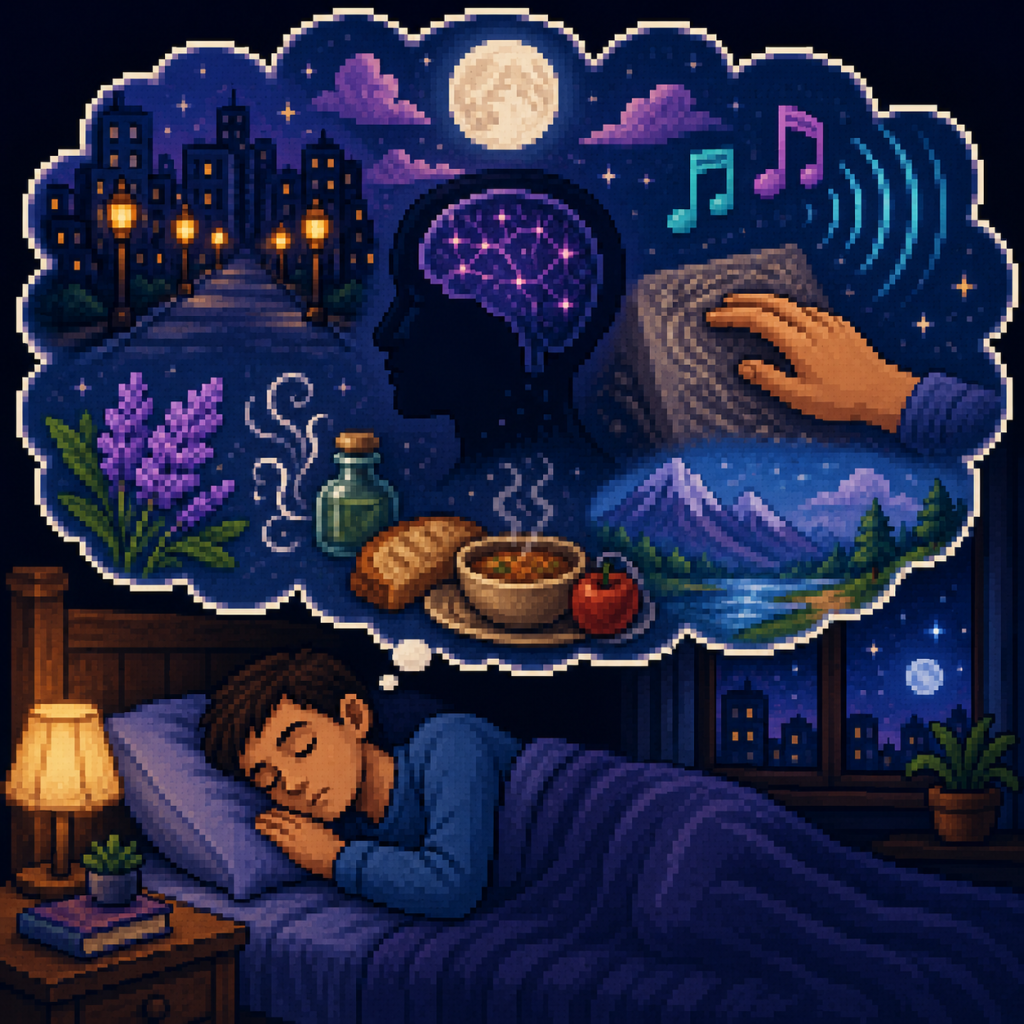
The answer really depends on when a person lost their vision and how the brain processes sensory memories during sleep…
People who are blind do dream. However, the way they experience dreams can look very different from the experience of sighted people. Some blind individuals see images in dreams. Others experience dreams through sound, touch, movement, smell, taste, and emotion.
Researchers have studied dreaming and blindness for decades. Their findings show that dreams are not only visual experiences. Instead, the brain builds dreams from the senses and memories a person uses most in daily life.
In this guide, we will explain:
- Whether blind people dream
- Why some blind people see images in dreams and others do not
- How other senses shape dreams
- What science says about REM sleep and dreaming
- Common misconceptions about blindness and dreams
- Personal experiences shared by blind individuals
If you have ever wondered, can blind people see in their dreams, this guide explains the answer in simple, practical terms.
Table of Contents:
- Do Blind People Dream?
- What Happens in Dreams for People Born Blind?
- Can Blind People See in Their Dreams if They Lost Vision Later in Life?
- Why Other Senses Become Stronger in Dreams
- What Science Says About Dreaming and REM Sleep
- Common Misconceptions About Blindness and Dreams
- Different Types of Blindness and How They Affect Dreams
- What Blind Individuals Say About Their Dreams
- How the Brain Adapts to Blindness
- Do Blind People Have Nightmares?
- Why This Topic Fascinates So Many People
- Key Takeaways
- Final Thoughts
Do Blind People Dream?
Yes. Blind people dream just like sighted people.
During sleep, people who are blind go through the same sleep stages as everyone else, including rapid eye movement (REM) sleep. REM sleep is the stage most associated with vivid dreams, emotional processing, and memory consolidation.
Scientists agree that dreaming is a universal brain function. Dreams help the brain process experiences, emotions, memories, and information gathered throughout the day.
The key difference is how blind people experience dreams.
What Happens in Dreams for People Born Blind?
People born blind or those who lose vision very early in life usually do not experience visual dreams.
Researchers consistently find that people born without visual memories usually do not experience images in dreams the same way sighted people do. Instead, the brain creates dreams using other senses.
These dreams may include:
- Conversations and voices
- Physical touch and texture
- Smells and tastes
- Body movement and spatial awareness
- Emotional intensity
- Sound environments
A congenitally blind person may dream about moving through a crowded room by following footsteps, echoes, temperature changes, or familiar voices. The dream can still feel vivid and detailed without containing visual imagery.
The brain uses whatever sensory information it has available.
Can Blind People See in Their Dreams if They Lost Vision Later in Life?
People who lost their vision after having sight often report visual dreams.
This happens because the brain stores visual memories from earlier life experiences. During dreaming, the brain can replay or recombine those stored images.
For example, someone who became blind as an adult may still dream about:
- Faces
- Colors
- Landscapes
- Familiar buildings
- Written words
- Movies or television memories
The earlier visual memories remain accessible during sleep.
Research suggests that children who lose vision after ages 5 to 7 are more likely to keep visual imagery in dreams. However, dream experiences vary from person to person.
Some people retain vivid imagery for decades after vision loss. Others notice that visual dream content fades over time.
So, when discussing can blind people see in their dreams, the key factor is not blindness itself. The key factor is whether the brain has visual memories to work with.
Why Other Senses Become Stronger in Dreams
People who are blind often rely more heavily on nonvisual senses while awake. Those same senses naturally become more prominent during dreams.
Studies show that blind dreamers frequently report:
- More detailed sounds
- Greater awareness of texture
- Stronger smell and taste sensations
- Enhanced movement and balance sensations
- More emotional intensity
Researchers call this process sensory substitution.
The brain adapts by using available sensory systems more efficiently. Areas of the brain traditionally associated with vision can also become involved in processing sound, touch, or spatial information.
As a result, dreams can become deeply immersive even without visual imagery.
For example:
- A sighted person may dream about seeing a thunderstorm.
- A blind dreamer may instead experience thunder, rain texture, wind direction, pressure changes, and fear or excitement.
Both dreams can feel equally vivid.
What Science Says About Dreaming and REM Sleep
Dreaming is closely linked to REM sleep.
During REM sleep, the brain becomes highly active. Areas associated with memory, emotion, and sensory processing show increased activity. Even though the body is asleep, the brain continues organizing information and replaying experiences.
Scientists believe dreams help with:
- Emotional regulation
- Learning and memory consolidation
- Problem-solving
- Processing social experiences
- Stress management
Importantly, the brain does not create dreams only from current sensory input. Instead, it builds dreams from stored memories and learned experiences.
That is why visual memories matter so much when answering the question, can blind people see in their dreams.
If the brain has stored visual information, visual dreams are possible. When the brain never forms visual memories, dreams depend more on other senses.
Organizations like the National Sleep Foundation and the American Academy of Sleep Medicine provide additional information about REM sleep, dream research, and sleep health.
Common Misconceptions About Blindness and Dreams
There are many myths surrounding blindness and dreaming.
Here are some of the most common misconceptions.
Misconception 1: Blind People Do Not Dream
This is false!
Blind people absolutely dream. Studies consistently show that blind individuals experience dreams during REM sleep just like sighted individuals.
The real difference is the sensory makeup of those dreams.
Misconception 2: All Blind People Experience Darkness in Dreams
Not necessarily…
Someone who became blind later in life may continue to experience visual imagery. Others may dream primarily through sound, touch, and emotion.
Memory and sensory experience shape dreams.
Misconception 3: Dreams Without Images Are Less Real
This is also incorrect!
Blind dreamers often describe dreams as vivid, emotional, immersive, and meaningful. Visual imagery is only one way the brain creates a dream environment.
Misconception 4: Blindness Always Means Total Darkness
Blindness exists on a spectrum.
Some people have partial vision, light perception, or limited visual fields. Others have no visual perception at all.
This distinction also affects how people answer the question, can blind people see in their dreams.
Different Types of Blindness and How They Affect Dreams
Understanding the different types of blindness helps explain why dream experiences vary so widely.
Congenital Blindness
Congenital blindness refers to blindness present at birth or very early childhood.
People with congenital blindness usually do not experience visual dream imagery because the brain never developed visual memories.
Dreams instead focus on:
- Sound
- Touch
- Motion
- Emotion
- Smell
- Taste
Acquired Blindness
Acquired blindness occurs later in life.
People who lose vision after developing visual memory often continue to experience visual elements in dreams.
The degree of visual dreaming depends on:
- Age at vision loss
- Amount of remaining vision
- Strength of visual memory
- Time since blindness occurred
Partial Blindness
Some blind individuals retain limited vision.
Their dreams may contain fragmented images, flashes of light, blurred shapes, or incomplete visual scenes.
Because blindness exists on a spectrum, there is no single universal answer to the question, can blind people see in their dreams.
What Blind Individuals Say About Their Dreams
Scientific research provides useful data, but personal experiences add important context.
Many blind individuals describe dreams as rich, emotional, and highly sensory.
Common dream themes include:
- Traveling or navigating spaces
- Conversations with friends and family
- Music and environmental sounds
- Physical sensations
- Anxiety about movement or orientation
- Social interactions
Some blind dreamers also report nightmares related to mobility or navigation challenges.
Others describe dreams centered around emotion rather than environment.
Importantly, many blind individuals emphasize that dreams feel complete even without visual imagery.
Vision alone does not determine dream quality.
How the Brain Adapts to Blindness
The human brain is highly adaptable.
When vision is absent or reduced, the brain often reallocates resources to strengthen other sensory systems.
Researchers studying neuroplasticity have found that blind individuals may process sound, touch, and spatial awareness differently than sighted individuals.
For example:
- Auditory detail may become more refined.
- Tactile sensitivity may improve.
- Spatial mapping can become more sophisticated.
- Memory for sound environments may strengthen.
These adaptations also influence dream construction.
Instead of relying mostly on visual information, the brain creates dream experiences from the senses a person uses most during daily life.
Do Blind People Have Nightmares?
Yes. Blind people can experience nightmares just like sighted people.
Some studies suggest that blind individuals report more nightmares, especially when daily life includes stressful mobility or navigation challenges.
Nightmares may involve:
- Getting lost
- Disorientation
- Threatening sounds
- Loss of control
- Social anxiety
- Physical danger
Just like sighted dreams, nightmares among blind individuals are influenced by stress, memory, emotion, and daily experiences.
Again, these dreams may or may not include visual imagery.
Why This Topic Fascinates So Many People
Questions about dreams often reveal broader curiosity about consciousness and perception.
People are naturally interested in understanding how others experience the world differently.
The question, can blind people see in their dreams, also challenges the common assumption that dreams are primarily visual.
In reality, dreams are multisensory experiences created by the brain.
For sighted individuals, vision may dominate dream content because vision dominates waking experience. For blind individuals, other senses often take center stage.
This demonstrates how flexible and adaptive the human mind truly is.
Key Takeaways
Here are the most important points to remember:
- Blind people do dream.
- Dream experiences vary depending on when vision loss occurred.
- People born blind usually do not experience visual imagery in dreams.
- People who lost vision later may retain visual dream content.
- Sound, touch, smell, taste, movement, and emotion can dominate dreams.
- The brain builds dreams from stored sensory memories and lived experiences.
- Blind dreams can feel just as vivid and emotionally powerful as sighted dreams.
Final Thoughts
So, can blind people see in their dreams?
Sometimes yes, sometimes no.
The answer depends primarily on whether the person has visual memories from earlier life experiences. People born blind usually dream without visual imagery. People who lose vision later often continue seeing images in dreams.
Most importantly, people do not experience dreams through sight alone.
Dreams are complex sensory and emotional experiences created by the brain. Sound, touch, movement, smell, taste, memory, and emotion all contribute to dream construction.
Whether visual or nonvisual, dreams remain a universal human experience.